


The Growth of Outsourcing: Examining the Steady BPO Services Industry CAGR
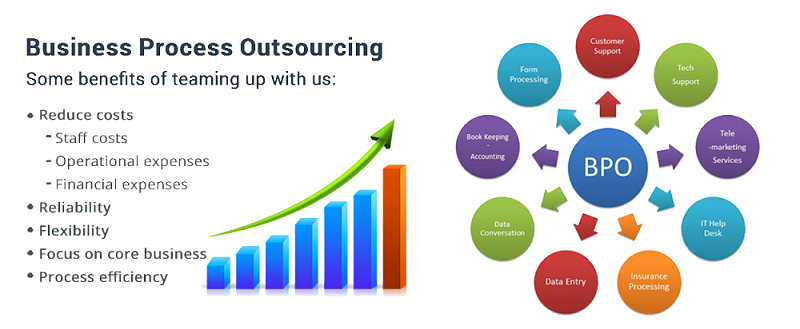
The financial outlook for the industry that provides outsourced business functions remains strong and resilient, reflecting its integral role in the global economy. Industry analysts are consistently forecasting a healthy and positive Business Process Outsourcing Services Industry CAGR (Compound Annual Growth Rate) for the foreseeable future. This steady growth rate is a direct result of the enduring business drivers of cost efficiency, scalability, and the strategic desire to focus on core competencies. The solid CAGR signifies that BPO is a mature yet still expanding market, with continued investment from both new and existing clients. This expansion is not a speculative bubble but a reflection of a long-term, structural shift in how businesses organize their operations, cementing BPO as a standard and proven strategy for achieving operational excellence and strategic focus in a competitive world.
Several powerful, next-generation factors are working in concert to fuel this sustained CAGR. The most significant of these is the integration of technology, particularly Robotic Process Automation (RPA) and Artificial Intelligence (AI), into BPO service delivery. Leading BPO providers are no longer just offering labor arbitrage; they are offering "intelligent operations." They are using RPA "bots" to automate repetitive, rule-based tasks like data entry and invoice processing, which dramatically improves efficiency, accuracy, and speed. They are using AI-powered chatbots and analytics to enhance customer service and to extract business insights from the processes they manage. This shift from a people-only model to a "human-plus-bot" model is a major driver of value and growth, allowing providers to offer more sophisticated services and a higher ROI to their clients.
From a regional perspective, the market's geography is a key part of its story. The Asia-Pacific (APAC) region, particularly India and the Philippines, has long been the dominant hub for offshore service delivery, and it continues to hold a massive share of the market due to its large, educated, English-speaking workforce and significant cost advantages. However, the market is also seeing strong growth in other regions. Eastern Europe (e.g., Poland, Romania) has emerged as a major nearshoring destination for Western European clients, offering a good balance of cost, skill, and cultural proximity. Latin America (e.g., Colombia, Mexico) is a growing nearshoring hub for North American clients. While offshoring remains a major part of the market, the demand for nearshore and even onshore services is also growing, driven by a desire for greater cultural alignment, time zone advantages, and data sovereignty concerns.
The long-term implications of such a sustained and steady CAGR are significant for the global workforce and the nature of corporate work. It signals that a wide range of transactional and administrative jobs will continue to be consolidated and managed by large, specialized service providers. This will continue to drive demand for skilled BPO professionals in major delivery hubs around the world. For the client companies, it means their in-house teams will become smaller, more strategic, and focused on high-value, non-routine work. The BPO industry itself will continue to evolve, moving up the value chain from simple transactional services to more complex, judgment-based Knowledge Process Outsourcing (KPO) and data analytics services. This strong growth trajectory points to a future of even more deeply integrated and technology-driven partnerships between clients and their BPO providers.
Top Trending Reports:

 English
 Arabic
 French
 Spanish
 Portuguese
 Deutsch
 Turkish
 Dutch
Dutch
 Russian
 Romaian
 Portuguese (Brazil)
 Greek
Greek