


The Growth of the Dedicated Cloud: Examining the Private Cloud Services Industry CAGR
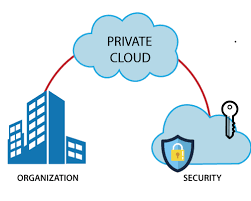
The financial outlook for the single-tenant, dedicated cloud infrastructure sector remains robust and positive, demonstrating its enduring relevance in a hybrid world. Industry analysts are consistently forecasting a strong and healthy double-digit Private Cloud Services Industry CAGR (Compound Annual Growth Rate) for the coming years. This impressive growth rate is a direct reflection of the fact that for a significant portion of enterprise workloads, the public cloud is not the right answer. The high CAGR signifies that despite the massive growth of the public cloud, organizations are continuing to invest heavily in private cloud solutions to meet their specific needs for security, compliance, performance, and control. This sustained expansion shows that the private cloud is not a transitional technology but a permanent and vital part of the modern enterprise IT landscape.
Several powerful, next-generation factors are working in concert to fuel this robust CAGR. The most significant of these is the rise of hybrid cloud and multi-cloud strategies. Very few large organizations are "all-in" on a single public cloud. Instead, the dominant strategy is to use a mix of private cloud for stable, predictable, and sensitive workloads, and public cloud for dynamic, scalable, and less sensitive workloads. This makes the private cloud a critical "home base" in a broader hybrid strategy. The evolution of private cloud technology itself is another major driver. Modern private cloud platforms, often based on hyper-converged infrastructure (HCI) and sophisticated automation software, are becoming much easier to deploy and manage, lowering the barrier to entry. The growth of managed private cloud services further accelerates adoption by removing the operational burden from the customer.
From a regional perspective, the market's growth is a global phenomenon. North America currently holds the largest market share, driven by its large enterprise sector, particularly in finance and healthcare, which have long been heavy users of private cloud for security and compliance reasons. The region's mature IT market and the presence of many leading private cloud technology vendors contribute to its dominance. However, the Asia-Pacific (APAC) region is projected to witness the fastest growth rate. This surge is being driven by increasing concerns about data sovereignty, which is leading many governments and businesses in the region to favor in-country private cloud deployments over using public clouds whose data centers may be located overseas. The rapid digitalization of the banking and government sectors in APAC is also a major catalyst for private cloud adoption.
The long-term implications of such a sustained and healthy CAGR are significant for the future of enterprise IT. It signals that the future is not "public cloud only," but is definitively hybrid. The private cloud will continue to be the trusted and performant foundation for a large portion of mission-critical enterprise applications. This growth will continue to drive innovation in private cloud platforms, making them even more cloud-like, automated, and easy to manage. It will also create continued demand for skilled infrastructure engineers who can design and operate these private cloud environments. Ultimately, this strong growth trajectory points to a future where enterprises have a sophisticated and flexible mix of on-premise private clouds and multiple public clouds, all managed through a unified control plane to deliver the right infrastructure for the right workload.
Top Trending Reports:

 English
 French
 Spanish
 Portuguese
 Deutsch
 Turkish
 Dutch
Dutch
 Italiano
 Russian
 Romaian
 Portuguese (Brazil)
 Greek
Greek